
 UAE/GCC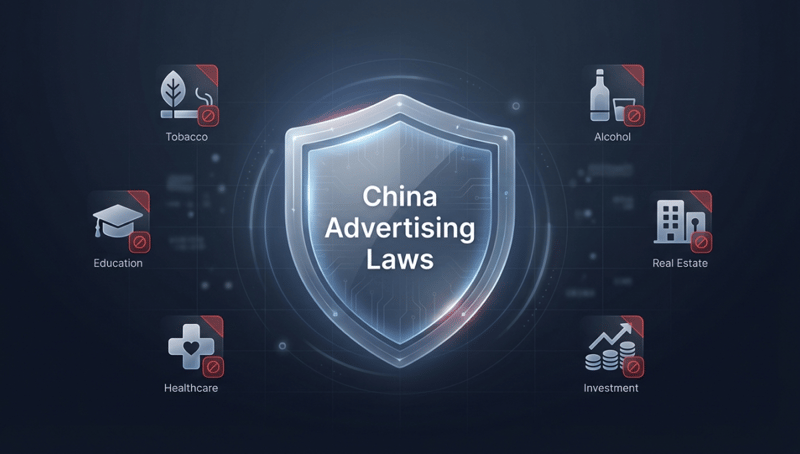
Like most countries, China has set regulations on advertisements to protect consumer’s health and safety. While there are general regulations that all advertisers need to follow under the Advertisement Law of the People's Republic of China, there are stricter restrictions placed on specific industries including, tobacco, alcohol, and healthcare.
However, with both the increasing popularity of non-traditional media and issues from multiple scandals, including Wei Zexi and Blackmores, the country has since tightened its restrictions on advertising. In 2018, the Standing Committee of the National People's Congress set out a number of amendments that have further tightened the regulations that advertisers, spokespeople and advertising platforms need to adhere to.
When it comes to advertising regulations, all platforms need to adhere to the same standards, from TV ads to Baidu ads. In this blog, we break down some of the most important regulations that companies need to bear in mind when defining their advertising strategy for China.
Banned Industries
While the government has banned specific industries from advertising, the various platforms also have their own restrictions.
Government Restrictions
The government has forbidden ads for businesses engaged in the following:
❌ Pharmaceutical narcotics and toxic drugs;
❌ Obscenity;
❌ Pornography;
❌ Gambling;
❌ Superstitions;
❌ Terror;
❌ Violence.
Baidu’s Restrictions
Some may consider Baidu’s restrictions to be even more restrictive than the government’s. In addition to government restrictions, China’s largest search engine forbids the publication of ads for businesses in the following industries:
❌Political and Religious Violations
❌ Illegal Medical Services
❌ Illegal and Prohibited Drugs
❌ Gambling-Related Violations
❌ Illegal Agency Services
❌ Pornographic and Violent Content
❌ Online Cheating and Fraud
❌ Illegal and Prohibited Product Sales
❌ Illegal Financial and Invoice Services
❌ Illegal Information Trading
General Advertising Regulations
General Advertising Regulations Many of China's advertising regulations are similar to international standards. Ads must adhere to the following:
-
Data, quotes, and survey information must be accurately represented, sourced, and comply with legal requirements. The scope and validity period of the cited data must also be clearly stated.
-
Ads featuring patented products or methods must indicate both the patent number and the patent type.
-
Ads cannot criticize other operators, competitors, or their products/services. - Ads must be clearly identifiable as advertisements and must not disguise themselves as news reports. Advertisements must be distinctly separated from non-advertising content and labeled with the word “Advertisement.”
-
Pop-up online ads must be clearly marked with a close button that ensures one-click closure and must not interfere with users' normal online activities.
- Advertisements cannot be sent to residences, vehicles, or other personal properties without explicit consent. For advertisements sent via email, they must include the sender's real identity, valid contact information, and a clear mechanism for recipients to unsubscribe.
Failure to adhere to these regulations may lead to penalties, including fines and suspension of advertising accounts.
Regulated Industries for Advertising in China
Alcohol
Regulations around the advertisement of alcohol are common globally. However, in China, the restrictions may be considered stricter than most.
Alcohol-related advertisements in China cannot encourage or feature the act of alcohol consumption. Any activities that would be considered dangerous to do under the influence of alcohol, such as driving cars, boats or planes, cannot be featured in the ads.
Advertisements must not depict drinking actions or excessive drinking.The content in the ads also cannot imply relaxing, anxiety-reducing, or improvements to physical strength.
Tobacco
Restrictions on ads for tobacco products are some of the strictest in the country; it is essentially banned. Tobacco products, including its name, trademarks, packaging, or any relatable features, cannot be advertised in mass media, public places, public transportation, or outdoors. Minors cannot be the target audience for or receive any tobacco-related ads.
Tobacco products cannot be indirectly advertised through other goods or services;
Any necessary announcements, such as relocation, name change, or job postings, cannot feature any identifiable features of the product, including its name.
Healthcare / Medical
Prescription drugs, except for narcotics, and those to be used by medical professionals, can only be advertised in designated medical & pharmaceutical publications.
Any other special drugs, including narcotics, toxic drugs for medical use, radioactive drugs, among other drugs that should only be used by medical professionals, can never be advertised.
Ads must strictly adhere to the approved drug instructions and prominently indicate contraindications and side effects;
Any advertisements for products or services including, medical equipment, beauty, online games, among others that can impact the physical and mental health of minors cannot be featured on mass media.
Investments
Products or services for which investors can expect a return on investment needs to ensure sufficient warnings regarding the potential risks, and its responsibilities.
Ads are not allowed to either implicitly or explicitly guarantee any results, capital preservation, no risks, or circumstances related to the product or service unless the state provides it. Additionally, the ad cannot feature the names or images of any academic institutions, industry organisations, professionals, or beneficiaries as a means to recommend or certify the product or service.
Real Estate
The information on real estate ads needs to be true and accurate with regards to the property area, clearly stating it as the building area or the area inside the apartment and the following content must not be included:
- Guarantee of return on investment;
- Guarantee of property value appreciation;
- Violations of the state’s price management regulations;
- Misleading marketing information regarding transportation time or facilities, cultural and educational facilities, and planned facilities, among others.
Education
In order to better protect students from predatory advertising regarding their education, the advertising legislation stipulates that the following content cannot be featured in ads for businesses in the education industry:
- Implicit or explicit guarantee of a future result, including passing exams, entering higher education, and obtaining a degree;
- Implicit or explicit declaration that staff from examination institutions, or test-setting personnel complete the education or training programme;
- The names or images of any scientific research units, academic or educational institutions, industry organisations, professionals, or beneficiaries as a means to recommend or certify the programme.

Celebrity Endorsements
If you would like a celebrity to endorse your products or services, they must have genuinely used the products or services before making any statements about them. According to Chinese Advertising Law, endorsers must base their recommendations and testimonials on facts. Endorsing products or services without personal use or experience is considered illegal.
Before selecting a spokesperson, you need to ensure that they have not been administratively punished for false advertising within the past three years. Any individual who has been penalized for endorsing false or misleading advertisements is prohibited from serving as a spokesperson during this period.
Additionally, it is important to note that minors under the age of 10 cannot act as spokespersons in any form of advertising. This restriction aims to protect children and ensure ethical advertising practices.
Restrictions on Advertising to Children
No advertising activities, except for public service ads, are permitted in any pre-tertiary schools to protect children from predatory advertising. Any materials or equipment needed to perform or support pre-tertiary education, such as stationery, school buses, textbooks, and more, are also not allowed to feature or disguise ads.
Outside of schools, minors cannot be the target audience for advertisements that may harm their physical or mental health. For ads directed at minors under the age of 14, they must not:
-
Encourage unsafe behavior;
-
Induce minors to ask their parents to purchase the product or service;
-
Contain content related to medical treatments, drugs, health supplements, alcohol, beauty products, or other categories that may negatively impact minors' well-being.
These restrictions aim to safeguard minors from inappropriate advertising practices and ensure a healthy environment for their growth and development.
Advertising Content Restrictions
There are numerous restrictions on the type of content that cannot be featured on ads, regardless of the platform. The following cannot be featured on the ads:
❌ Use or disguised use of the national flag, anthem, emblem, army flag, emblem, or military song of the People’s Republic of China, including indirect or implied usage;
❌ Use of or the disguising of the names and images of state organisations, or its staff;
❌ Anything that damages the dignity or reveals the interests or secrets of the state;
❌ Words implying superiority over other organisations or brands, such as "state-level", "highest-level", "best", are not permitted;
❌ Content that harms public interests, social order, or social customs is not permitted;
❌ Anything that endangers or leaks personal information and impacts the safety of persons or property;
❌ Obscenity, pornographic, gambling, superstitious, terror, or violent content;
❌ Ethnic, racial, religious or sex discriminatory content;
❌ Content that encourages or harms the environment, natural resources, or cultural heritage protection;
❌ Content that disparages or belittles other organisations, businesses, or their products or services;
❌ Any other content prohibited by law.
Penalties
Penalties for violations of the Advertisement Law of the People’s Republic of China vary depending on the severity of the offense. For minor violations that do not severely impact society, fines may range up to 100,000 RMB, depending on the specific circumstances.
For more serious violations, fines can range from 3 to 5 times the advertising cost, with a minimum of 100,000 RMB and a maximum of 1 million RMB. In cases where the violation involves severe circumstances or repeated offenses, fines can be increased to 5 to 10 times the advertising cost, with a maximum penalty of 2 million RMB if the advertising cost cannot be determined.
If a company commits three or more violations within a two-year period, the penalties escalate. The company may face fines of 1 million to 2 million RMB, and its business license and advertising review approval documents may be revoked. Applications for review approval renewals will not be accepted within one year.
For medical institutions, violations may result in fines and additional penalties. In serious cases, the institution may face the revocation of its practice license, in addition to fines determined by the severity of the violation.
Getting Started With Advertising in China
If you are looking to advertise your business on one of China’s platforms, such as Baidu, Weibo, WeChat, you will need to adhere to the regulations placed by the Advertisement Law of the People’s Republic of China. Violations can lead to restricted access to any advertising platforms, which can detrimentally impact your business.
The above are only some of the key considerations a company must consider when looking to advertise their products or services in China. For more detailed information, you can visit the National People’s Congress website (please note that the updated legislation is only available in Simplified Chinese).
Does your company need assistance with getting started on advertising in China? Speak with one of our China marketing experts to find out how we can help!
.webp)