
 UAE/GCC
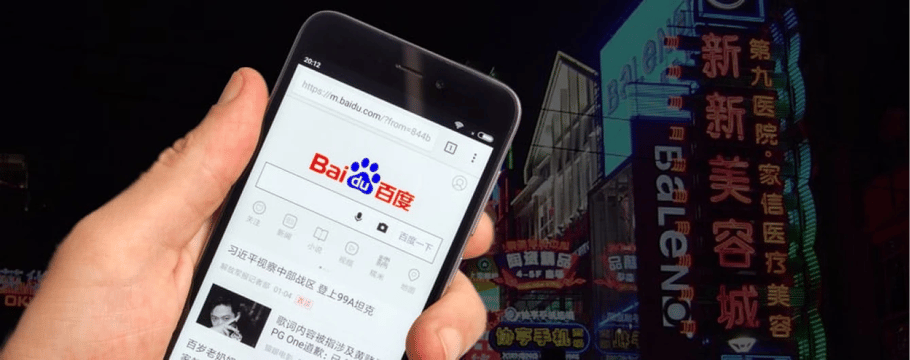
The keyword-to-landing-page-to-form-fill model that dominated B2B customer acquisition in China for a decade is being dismantled — not gradually, but fast. Baidu is no longer primarily a search engine that routes traffic. It is becoming an AI-native platform where queries get answered directly, prospects get qualified conversationally, and the first human touchpoint is pushed further down the funnel than most sales teams are currently prepared for. For B2B marketers running AI agents lead generation China strategies, this is not a future consideration. It is the operating reality of 2025 and 2026.
The numbers signal the scale of the shift. China's AI agent marketing and sales market was valued at 44.2 billion yuan ($6.2 billion) in 2024, and is projected to exceed 1 trillion yuan within five years, according to reporting from China Daily and EO Intelligence. Baidu's non-online marketing revenue — largely its AI Cloud business — grew 34% year-over-year in Q2 2025, a signal that the platform is successfully diversifying away from click-based advertising. These are not trend lines. They are structural changes to how the platform monetises attention and how buyers consume information.
Laurent, COO of Oxygen, puts it plainly: "AI Search is really gaining traction fast in China, much faster than the West even. The China market are historically very impatient when it comes to how they consume information, which means AI is perfect for instantly answering questions without having to read and scroll through blogs and social posts. Usually this means we need to have a sales person immediately answering queries within the 5-minute 'golden rule' window but there's a lot we can do with agents that can support this process." That last point is where the practical opportunity lies.
What Baidu's AI-Native Shift Actually Means for B2B Lead Generation in China
Baidu has been integrating its ERNIE foundation models — most recently ERNIE 4.5 — directly into its core search interface, with the explicit aim of delivering AI-generated responses across the majority of mobile search results. For a B2B buyer searching for, say, industrial automation suppliers or SaaS procurement tools, this means the search results page itself now provides substantive answers, comparisons, and recommendations before a single click happens. The implication for advertisers is significant: organic and paid listings that previously captured intent at the query stage are now competing with an AI layer that partially satisfies that intent before the user leaves the SERP.
This does not mean paid search is dead on Baidu — it means the role of that spend is shifting. Traffic that does convert is higher-intent, more specific, and arrives with more prior knowledge. The buyer who clicks through after an AI-generated response has already been pre-qualified by the conversation. Handled well, this is an advantage. Handled the same way as 2022, it produces worse CPL numbers and the same thin leads that never close. Understanding this distinction is the starting point for any serious rethink of Baidu PPC strategy in 2025 and beyond.
Baidu's Digital Employees: A New Layer in B2B Sales Infrastructure
Baidu AI Cloud has launched a formal "digital employee" programme, deploying AI agent roles including marketing managers, sales representatives, promotion specialists, and course advisers. These are not chatbots in the legacy sense — scripted response trees with limited context. They combine large language models with digital human interfaces and domain-specific industry knowledge, and they are designed to handle qualification conversations autonomously. IDC data reported by CRN Asia confirms that in the second half of 2024, AI services in China shifted materially toward agent-based systems capable of handling complex, multi-step tasks with reduced human oversight.
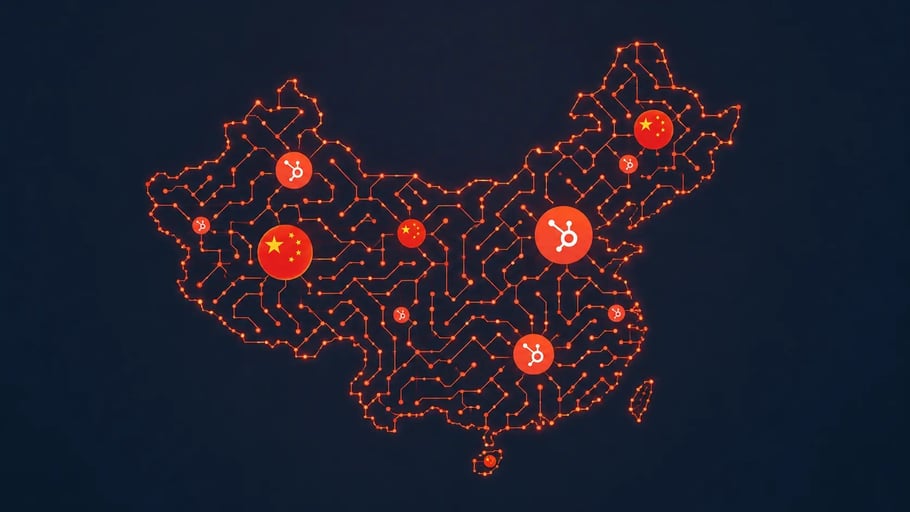
For B2B marketers, the practical application is this: an AI agent embedded in a Baidu landing page or WeChat touchpoint can handle the first three to five qualification questions in real time, route high-intent leads to a sales rep instantly, and log the entire conversation into a CRM such as HubSpot. The 5-minute response window — long considered the gold standard for B2B lead follow-up in China — becomes structurally achievable because the agent handles it, not the sales team. This matters more in China than in most markets precisely because of the behavioural dynamic Laurent describes: Chinese buyers expect immediacy, and a 20-minute delay in a response is often enough to lose the deal to a competitor who responded faster, not better.
The CRM-to-WeChat integration layer is where this infrastructure becomes genuinely useful rather than theoretically impressive. An AI agent that qualifies a lead but doesn't pass structured data to your sales system is just an expensive FAQ. The operational value comes from the handoff: enriched contact records, conversation summaries, lead scores, and routing logic that gets the right rep on the right lead within minutes.
Which Sectors Benefit Most from AI-Driven Lead Qualification in China
Not all B2B categories benefit equally from conversational AI qualification. The clearest gains come in sectors where the qualification criteria are structured and repeatable — where an AI agent can reliably distinguish a serious prospect from a time-waster without requiring the nuanced judgement of a senior salesperson.
- Industrial and manufacturing: Buyers typically have specific technical requirements — certifications, tolerances, MOQs, lead times. An AI agent can collect and verify these before any human time is spent. Given that sales cycles in this sector are long and technical validation is expensive, front-loading qualification is high-ROI.
- B2B SaaS: Trial eligibility, company size, use case fit, and budget range are all questions that can be handled conversationally. Intelligent lead scoring based on these inputs allows sales teams to prioritise enterprise leads over SME enquiries that would never convert at target ACV.
- Healthcare and medical devices: Procurement in this sector is heavily compliance-driven. AI agents can surface regulatory and licensing questions early, filtering leads by institutional type and purchase authority before routing to specialist sales reps.
- Professional services and education: Baidu's own digital employee rollout specifically highlights course advisers and promotion specialists — both roles where conversational qualification of intent, budget, and timeline directly determines whether a consultation converts to a sale.
- Private equity and M&A advisory: Less obvious, but increasingly relevant. AI-assisted pre-qualification of inbound investor interest — separating genuine deal flow enquiries from information fishing — is a use case several firms are beginning to test.
The Mechanics of Better Lead Quality: What Changes and What Doesn't
"Better lead quality" is the outcome every B2B marketing team claims and few can measure precisely. In the context of AI agent qualification on Baidu, it has a specific meaning: leads that arrive in your CRM with richer data, a higher probability of progressing to proposal stage, and a shorter time-to-first-meeting. The mechanism is that the AI agent has already done the filtering — budget range, decision-making authority, timeline, specific product interest — before the lead is logged. Compared to a form fill that captures name, company, and phone number, the delta is substantial.
What does not change is the underlying commercial fundamentals. An AI agent cannot manufacture demand that isn't there. If your Baidu targeting is broad and your offer is undifferentiated, the agent will qualify a larger share of a mediocre audience, not a smaller share of a great one. The targeting strategy upstream of the agent still determines the quality ceiling. This is why adapting Baidu campaign architecture — keyword strategy, audience segmentation, landing page intent alignment — matters as much as deploying the agent itself. Teams that treat AI agents as a lead gen fix without addressing campaign fundamentals will see marginal improvement at best. For a grounding on how to structure Baidu campaigns correctly before adding this layer, our guide to Baidu advertising costs, setup, and strategy covers the foundational decisions that determine whether any overlay — AI or otherwise — can perform.
A Practical Checklist for Adapting Baidu Campaigns in 2026
Baidu's AI-native evolution requires concrete changes to campaign architecture, not just philosophical adjustments. Independent analysis of Baidu's ERNIE integration confirms the platform is moving toward AI-generated responses for a majority of mobile queries — which means the window for capturing mid-funnel intent through traditional paid listings is narrowing. The following checklist reflects what needs to change operationally:
- Audit your keyword strategy for AI SERP displacement. Identify which of your current keywords are being answered directly by Baidu's AI layer. These queries are losing organic and paid click value. Shift budget toward longer-tail, high-specificity terms where AI-generated answers are less definitive and buyer intent is stronger.
- Replace static landing pages with conversational entry points. A page that presents a brochure and a form is no longer sufficient for high-intent traffic. Build landing experiences that open with a structured conversation — ideally an AI agent that can qualify and respond in under 60 seconds.
- Define your qualification logic before deploying any agent. The agent is only as good as the questions it asks and the routing logic behind them. Map your actual ICP criteria — company size, industry, budget band, purchase timeline, decision authority — and build these into the agent's qualification flow explicitly.
- Connect agent output to your CRM in real time. Every qualified conversation should create a contact record with structured data, not just a notification. HubSpot users can leverage workflows to auto-assign, score, and notify sales reps based on agent output fields.
- Instrument the handoff, not just the top of funnel. Track lead-to-meeting rate and lead-to-proposal rate by acquisition source. If agent-qualified leads are not converting at a higher rate than form fills, the qualification logic needs refinement — not more traffic.
- Align sales team expectations with the new flow. If the agent is handling initial qualification, sales reps need to understand what information has already been collected and start the conversation from a more advanced position. Reps who re-ask questions the agent already answered will erode the trust the automated flow built.
- Review your Baidu account structure for content-level relevance. Baidu's AI ranking systems increasingly reward content that matches user intent at a granular level. Ad copy, landing page content, and agent conversation design should all reflect the same specific value proposition.
The B2B marketers who will perform best on Baidu through 2026 are not necessarily those with the largest budgets — they are the ones who understand that the platform has changed its fundamental contract with advertisers. Traffic is no longer the output. Qualified conversations are. Building the systems to capture, qualify, and convert those conversations is the actual work, and most of the competitive advantage will be won or lost in the operational details of that infrastructure, not in the headline media spend.
.webp)