

 UAE/GCC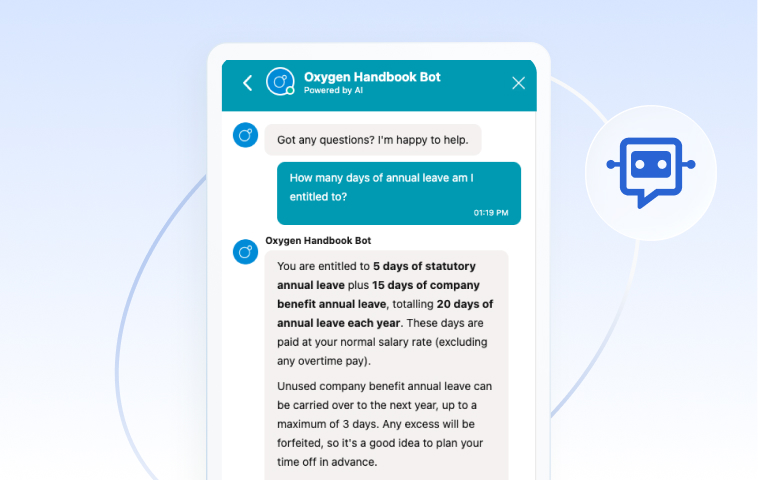
Most organisations have documentation, employee handbooks, knowledge base articles, and product guides, yet their teams still spend hours answering questions that these resources already cover. The problem: the information exists, but people struggle to get to what they want to know when they actually need it.
HubSpot’s Breeze Customer agent addresses this gap. Part of HubSpot's Breeze AI layer, it automates enquiry handling across both external support and internal teams, helping surface information when it's actually needed.
What the customer agent is and how it leverages your HubSpot data
The HubSpot Breeze Customer Agent is an AI-powered conversational tool that handles customer and employee enquiries by searching your knowledge base, CRM records, and documentation. When it cannot answer a question or when a predefined trigger is met, it transfers to a human agent to handle the enquiry directly.
The real advantage and value of HubSpot’s Customer Agent lies in data access. Your HubSpot portal already contains valuable information, such as contact records, call transcripts, deal history, and ticket conversations. Unlike ChatGPT, Claude, or other external AI tools that require exports or API middleware, the customer agent leverages your HubSpot data natively. Responses are grounded in your actual customer conversations and documented solutions in HubSpot, not generic knowledge pulled from the internet.
How to use HubSpot Customer Agents: A real-world example
Challenge: Oxygen's operations team spent excessive time answering employee questions about HR policies and alignment with company values.
Solution: We deployed the HubSpot Breeze Customer Agent and connected it to our employee handbook. Our knowledge base contained company policies and behavioural examples explaining what each company value meant in practice.
Test case: One of our employees faced a blockage at work, and asked the agent: "I can only complete this task 80%. Should I rush to finish on time with poor quality, or does this conflict with our values?"
Result: The agent referenced our specific core value "get it done, do it right", recommended proactive communication with the manager, and emphasised never compromising on quality. The response was contextually appropriate and specific to the employee’s question.
Key findings: The success of the customer agent was directly correlated with our knowledge base structure. Behavioural examples and contextual explanations enabled relevant responses, and the time invested in preparing the knowledge base before activation led to higher output quality.
Customer agent pricing with HubSpot Breeze credits
The Breeze Customer Agent is included in Professional and Enterprise subscriptions. Each subscription includes monthly HubSpot credits for the customer agent. For every customer-agent conversation, 100 credits are consumed, regardless of its length. 5 separate conversations would cost 500 credits, while a handoff to human agents continues in the same conversation thread and incurs no extra charges.
| HubSpot subscription | Subscription level | Included credits per month | Credit usage |
| Marketing Hub, Sales Hub, Service Hub, Content Hub | Professional | 3,000 credits | 1 credit = $0.01 |
| Enterprise | 5,000 credits | ||
| Data Hub, Customer Platform | Professional | 5,000 credits | |
| Enterprise | 10,000 credits |
How the credits work
Each HubSpot credit is worth $0.01. The number of credits you receive depends on your subscription level, as outlined above. These credits are renewed monthly and can be monitored directly in your HubSpot account settings.
Best practices to avoid credit waste
At 100 credits per conversation, poorly managed deployments can quickly drain your monthly allocation with little return. These practices help maximise value from your Breeze credits while improving Customer Agent performance.
-
Set monthly credit limits
Configure credit limits under Account → Billing → Breeze Credits before activating the Customer Agent. This prevents unexpected costs if conversation volume spikes or if the agent struggles with poorly structured knowledge base content. Always start conservatively, as you can always increase limits once you understand typical usage patterns. Without limits, a high volume of unsuccessful conversations can drain credits quickly with little return.
-
Deploy the agent to a small internal team first
Test with 5-10 internal users before broader rollout. The controlled group generates real usage data while limiting credit exposure. Internal testers will quickly surface gaps in your knowledge base, unclear responses, and edge cases that the agent cannot handle. -
Monitor usage patterns
Track which topics trigger the most conversations and how often the agent hands off to human agents. High handoff rates on specific topics indicate weaknesses in the knowledge base worth addressing. Understanding peak usage times and common enquiry types helps you prioritise content improvements and more accurately predict monthly credit consumption.
FAQs about Customer Agents on HubSpot
The customer agent addresses two key business challenges: reducing team workload and providing instant responses to repetitive enquiries.
- Automated enquiry handling: The customer agent automatically responds to customer and employee questions by searching your knowledge base, CRM records, and documentation. This reduces the time your team spends answering repetitive questions, freeing them for higher-value work.
- Leverages existing HubSpot data: Unlike external AI tools, the customer agent accesses your CRM data natively, such as call transcripts, ticket history, and customer conversations. Responses are grounded in your actual business context, not generic knowledge.
- Works for internal and external use cases: Beyond customer support, the agent handles internal enquiries: HR policies, onboarding questions, sales methodology guidance. One Service Hub seat enables organisation-wide deployment across multiple use cases.
- Seamless handoff to humange agents: When the agent cannot answer or specific triggers are met (e.g., "speak to manager"), it transfers the conversation to your team with full context preserved.
-
B2B SaaS: Handle product feature questions, troubleshooting guides, and onboarding documentation enquiries.
-
Manufacturing: Answer distributor queries on pricing, specifications, and order status using CRM data.
-
Education: Support student and parent enquiries on admissions, policies, and programme information.
-
Finance: Automate responses to compliance documentation, account queries, and service procedures.
-
Professional Services: Provide instant access to internal SOPs, methodology guidance, and HR policies for employees.
- Healthcare: Address patient enquiries on appointment procedures, documentation requirements, and facility information.
The HubSpot Customer Agent requires a Service Hub subscription and operates using Breeze credits, which are included based on your HubSpot plan.
1 credit = $0.01
Service Hub:
- Starter: 500 credits per month
- Professional: 3,000 credits per month
- Enterprise: 5,000 credits per month
Customer Platform:
- Starter: 500 credits per month
- Professional: 5,000 credits per month
- Enterprise: 10,000 credits per month
Credits are replenished monthly, but unused credits expire at the end of each usage period and do not roll over to the next month. If you exceed your monthly Breeze credits, you can purchase additional credits:
- Small: 500 credits for $5
- Medium: 5,000 credits for $50
- Large: 50,000 credits for $500 (subject to subscription discounts)
The customer agent uses 100 credits per conversation session (≈$1.00).
- Cost remains 100 credits regardless of conversation length. A 2-message exchange costs the same as a 20-message conversation
- Five separate conversations = 500 credits
- Handoff to a human agent continues within the same conversation thread (still 100 credits total)
- Set monthly credit limits under Account → Billing → Breeze Credits to prevent unexpected costs
Breeze customer agent is available in all HubSpot-supported languages, including but not limited to:
- English
- French
- German
- Japanese
- Korean
- Chinese (traditional or simplified)
Making the customer agent work for your organisation
HubSpot's Customer Agent helps teams reduce repetitive workload, improve response times, and make documentation accessible when people actually need it. Whether you're supporting external customers or streamlining internal HR and onboarding queries, the customer agent surfaces relevant information without pulling your team away from higher-value work. The Breeze Customer Agent's effectiveness comes down to preparation rather than the technology itself. Organisations that invest time in structuring their knowledge base with contextual explanations and behavioural examples consistently achieve better results than those who activate first and refine later. With proper knowledge base preparation and controlled deployment, you can maximise its potential to improve resolution rates and credit efficiency.
About HubSpot User Groups (HUGs)
HubSpot User Groups (HUGs) are community-driven events where HubSpot users come together to share best practices, explore new features, and learn from real-world use cases. Hosted by HubSpot Solutions Partners and community leaders, HUGs are designed to help businesses get more value from the HubSpot platform.
This blog is based on our HUG China session: ‘Agents & Assistants That Actually Work: Inbound 25 Updates’. During the live session, we explored how HubSpot’s latest AI tools, such as Breeze Agents, Breeze Studio, and Breeze Assistant, are transforming the way teams work in the CRM.
Watch the full recording here:
You can join HUG China to stay updated on future events and join our LinkedIn group to continue the discussion with peers and experts.
By joining the HUG community, you’ll gain access to upcoming sessions, practical demos, and strategic insights tailored to HubSpot users in the region.
%201.webp)