UAE/GCC

Yes, you can now use AI to do digital design work. We have a design team that almost exclusively use AI to speed up our design process. But without taste, and a solid understanding of colours, spacing, fonts, UI/UX etc, the output will always be average or worse. As power-users of all the best AI tools, I have never yet seen a system first-pass do amazing design work. That gap, between what AI can produce and what actually builds a credible brand, is the whole problem facing professional services firms right now.
AI slop is everywhere. Websites, social posts, decks, all generated faster than ever and at a glance they look okay. But too often they are shallow and don't actually help the reader. It's fluff. Fluff that takes time to read through and decipher. And for partners at accounting, legal, consulting, recruitment and advisory firms, where trust and referrals drive everything, that fluff is actively working against you.
Why AI slop fails professional services firms
I have watched the pattern enough times to be blunt about it. There are some interesting YouTube videos covering this where they ask the AI a 100 times in a row to just "make it better". And what does the AI do? It just keeps layering complexity until eventually the page is so bad it's laughable. The first result was okay, by like the 4th or 5th pass it was average. But realistically the AI cannot make 'great' or 'amazing', especially if you have high standards and want to be an industry leader.
The market is catching up to this faster than most firms realise. Usage of the term "AI slop" jumped roughly ninefold in 2025 compared to the year before, and by October it had become a mainstream, heavily discussed topic rather than a niche designer complaint. Enthusiasm for AI-generated content has collapsed in parallel. The share of consumers who prefer AI-generated content over traditional content fell from 60% in 2023 to 26% in 2025. When your buyers are partners deciding who to trust with a merger, a lawsuit or an audit, landing on the wrong side of that number is expensive.
Unfiltered AI makes your brand look cheap
Business services companies need to be cautious of being overly reliant on ChatGPT for image use, or using cheap models to do copywriting and translation. It "works" but makes the brand look cheap or fake. I want to be precise here, because this is not a taste preference. The damage is measurable.
Nearly a third of consumers say a brand using AI-generated content in its marketing will make them trust that brand less. And the backlash is not purely about visual quality. Research shows that when the same work is labelled "AI created", people consistently judge it as less beautiful, meaningful and profound, because they tie creativity to intention, effort and expression. The moment your audience senses you didn't bother, the perceived value drops. Peer-reviewed work on luxury advertising found the same thing: once consumers know content is AI-generated, they perceive the brand as having put in less effort. For a firm selling judgement and diligence, signalling "we couldn't be bothered" is close to fatal.
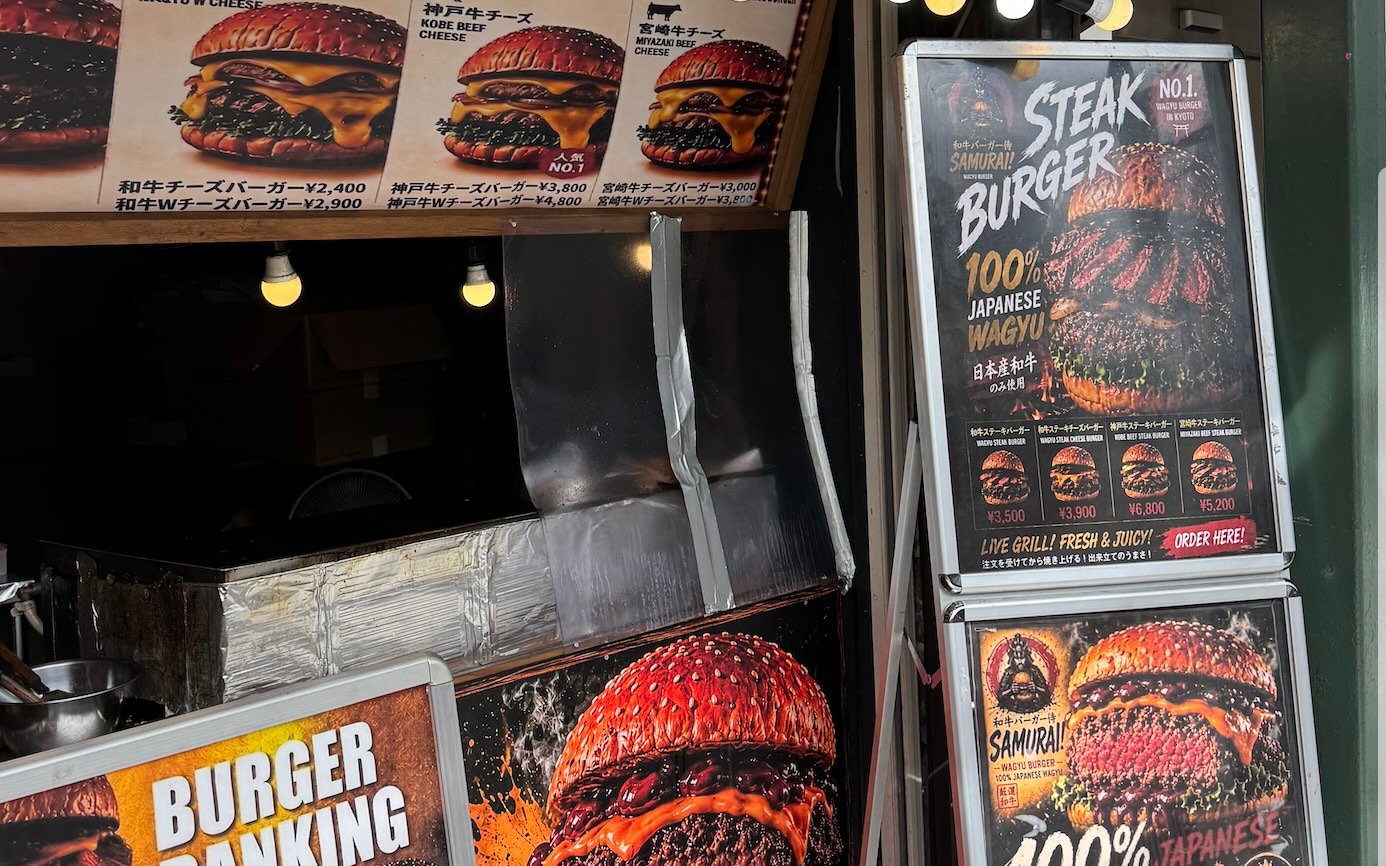
I think about a Japanese food stand I came across that used a pile of AI slop images to advertise its menu. The pictures made the food look terrible, warped, plasticky, slightly wrong in a way you can't name but instantly feel. The food itself was probably fine. The signage told you otherwise. That is exactly what a professional services firm does to itself when ChatGPT does all its images and Claude vibe-codes the website overnight. The underlying work might be excellent. The presentation quietly says "cheap".

Don't hire an AI specialist, hire taste
So what can you do as a business owner? You do not need to hire an AI-specialist, something which many businesses think is the best idea. Realistically anyone can use AI, you don't need to be a specialist to do so. Hire for talent, hire for vision. And if you can't afford this kind of leader or visionary in your team, hire an agency that can provide access to those people.
I would be cautious of agencies that are 'slop factories' offering low prices to win contracts but then turning all work over to a third party using low-cost labour in developing countries and cheap AI subscriptions. The output looks the same in the pitch deck and falls apart in the market. The thing you are actually paying for is discernment: someone who knows your industry, knows what good looks like, and will reject the average fourth-pass output that the AI happily hands over. If you are rethinking your site, our round-up of B2B website design examples in Asia shows what that bar actually looks like in practice.
How to prevent AI slop
Here's a short set of principles I use when clients ask me how to avoid the slop trap. None of them require banning AI. They require accountability on top of it.
- Don't waste your lead's or customer's time with long AI slop content. Nobody has time these days. I don't want to see another deck that repeats information or has superfluous small headings.
- Make sure your branding is consistent and good quality. Nobody is going to take you seriously and contact you if it looks like Claude vibe-coded your website overnight and ChatGPT did all your images.
- Provide real quality insights into your niche. Either unique information nobody else has or a unique opinion. This is especially important for social media.
- Hire visionaries with taste, or hire an agency that can give you access to those people. You cannot do this by forcing 6 hats onto one person with a Claude account.
- Remember that while almost anything can technically be done with AI, you shouldn't trust AI to finalise things. You need a layer of accountability, someone with knowledge of marketing for your industry and the taste required to make judgements on what the AI does.
The third point matters most for this reader. In relationship-driven industries, referrals dominate and digital earns its keep by reinforcing the reasons someone was referred to you in the first place. A genuinely sharp opinion piece on, say, cross-border M&A tax exposure does that. A generic listicle restating what everyone already knows does the opposite. It tells the referral they were wrong about you.
The one-person marketing team is a trap
I have seen this mistake wreck good businesses. Hiring a single marketing manager and saddling them with the responsibilities of a designer, developer, copywriter, event manager and social media expert is a fast track to a burnt-out employee who is doing nothing well. AI does not fix this. It just lets one overloaded person produce more mediocrity, faster. The output goes up and the quality goes down, and because it all technically ships, nobody notices until pipeline dries up.
The honest alternative is specialisation. A senior designer, a senior social specialist, a copywriter who understands your sector, and someone with the taste to sit above all of it. Someone who can do all of these things well is extremely rare. Trust me, I should know. For most firms the maths does not work as a set of full-time hires.
How to win with AI
I do not want this to read as anti-digital, because it isn't. The firms winning right now are using AI aggressively and still look premium, because they put human judgement on top. The leverage is real when you aim it correctly. A well-run content engine built on genuine insight compounds. Getting the plumbing right matters too, which is why I rate a properly integrated CRM and email setup over a scattergun of tools, and our comparison of HubSpot versus Mailchimp gets into where that line falls for serious firms.
If you operate across the APAC and GCC regions, the stakes rise again. In Greater China, inbound and content marketing absolutely work, but the channels and expectations differ enough that lazy AI translation gets you nowhere. I have written before about whether inbound marketing works in China, and the short version is that quality and cultural fluency decide everything. Cheap models producing stilted copy are the fastest way to signal that you don't understand the market you are trying to enter.
Quality > output
I keep returning to one idea when partners ask me whether all this AI anxiety is overblown. It isn't. Researchers now describe a "post-AI" economy, where success depends on transparency, intent and creative quality rather than sheer volume. The honeymoon is over. Everyone has the same tools, so output itself has stopped being a differentiator. Judgement is the differentiator.
At agencies like ours, for a rate lower than a single senior employee, you get access to an entire team of experts who know how to use AI well, have varied experience in the industry, and are discerning with their output. That is the actual value on offer, not the AI, which anyone can buy. Don't be the business mistaking output for progress. The bar is now higher than ever for businesses to do well, and the firms that understand the difference between shipping content and earning trust are the ones your referrals will keep coming back to.